
The Real ROI of Near-Real-Time Inventory Visibility in 3PLs
A practical ROI breakdown for near-real-time inventory visibility in 3PLs—cutting expedites, stockouts, chargebacks, and exception labor with measurable inputs.
Why near-real-time inventory visibility is where 3PL ROI actually shows up

In a 3PL, the cost of inventory uncertainty compounds fast: mis-picks trigger rework, “missing” units create stockouts, and customer service escalations end in chargebacks or expedited-shipping. The irony is that most WMS records don’t fail dramatically—they drift quietly as pallets move, cartons split, and picks happen faster than confirmations. Near-real-time inventory-visibility closes that drift window, turning “we’ll find it later” into “we know where it was last seen.”
RFID LedgerOps is an observability overlay that continuously reconciles RFID read events with the WMS/ERP system of record. It maintains a last-seen location ledger, detects variances (missing/extra/misplaced), and routes exceptions with evidence. For a 3pl, the ROI is less about fancy dashboards and more about protecting SLAs and margin: fewer expedites, fewer stockouts, fewer write-offs, and faster root-cause resolution. The best signal to watch is not just accuracy %—it’s the operational drag visible in warehouse-kpis like exception minutes per order, picks per hour, and “can’t find” rate by zone.
Where the money comes from: five ROI levers tied to warehouse KPIs
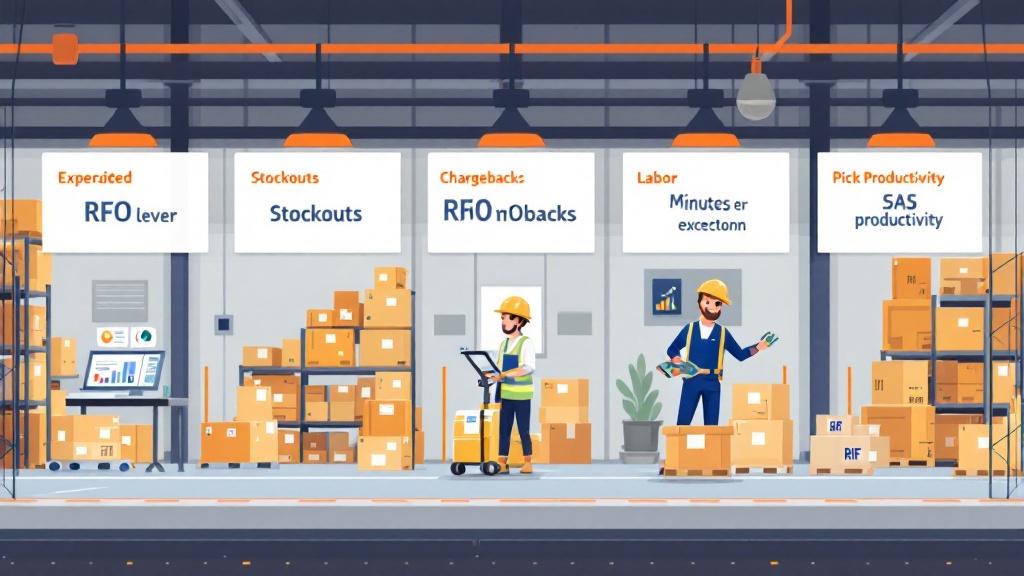
The real ROI model is a sum of a few concrete levers. First, reduced expedited-shipping: when an item is “missing,” teams often ship a replacement overnight, then later find the original—paying twice. Second, fewer stockouts and backorders: last-seen evidence and rapid recount tasks help recover sellable units before orders miss cutoffs. Third, fewer chargebacks and client disputes: in a 3pl, showing read history and exception notes reduces “you lost it” claims and shortens the billing cycle.
Fourth, faster exception resolution and higher pick productivity: every “can’t find” incident steals minutes from pick paths, creates double-handling, and increases congestion. Fifth, shrink reduction: variance detection highlights zones, shifts, or processes that systematically leak accuracy. Tie each lever to warehouse-kpis you already track—picks/hour, dock-to-stock time, order cycle time, and discrepancy rate by SKU velocity.
A simple monthly ROI estimate is: (# exceptions × minutes saved × labor rate) + (expedites avoided × average expedite cost) + (chargebacks avoided) + (sales recovered from avoided stockouts). The key is using your own baseline error rates and exception minutes, not generic benchmarks.
A practical business case (and common pitfalls) for RFID-ledger exception management
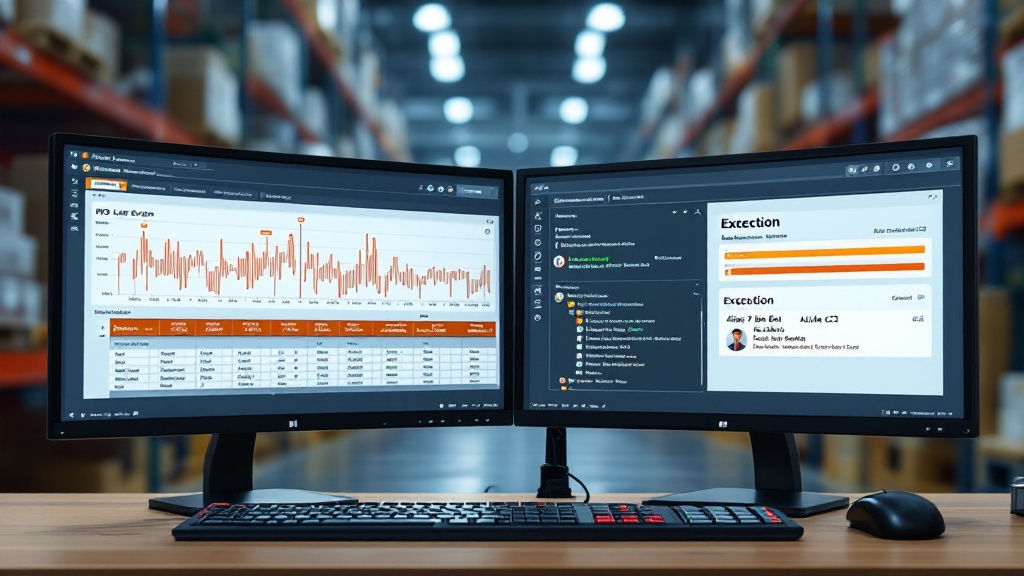
To build a credible roi case, start with a 30-day baseline: count “can’t find” events, shorts at packing, and inventory adjustments; measure average minutes to resolve each exception; and isolate expedite root causes. Then model what changes when RFID LedgerOps continuously reconciles reads against your WMS: alerts fire when picks occur without dock reads, “where were these last seen?” questions become instant, and recount tasks target the specific aisle/bin instead of a full-area search. The win is not only accuracy—it’s cycle-time compression from hours to minutes.
Avoid common pitfalls. Don’t assume 100% read rates; plan for noise, missed reads, and deduplication, and measure confidence by zone. Don’t overvalue a single accuracy metric; focus on inventory-visibility outcomes like reduced exceptions per 1,000 lines and fewer expedites per week. Don’t ignore integration reality: the overlay should sync adjustments back via REST/webhooks and keep an audit trail for clients. Finally, don’t skip change management—exception workflows need owners, SLAs, and a feedback loop.
If you can quantify even small improvements in exception minutes and expedited-shipping frequency, the payback in a 3pl is often faster than expected—because the biggest savings come from preventing the second and third-order costs of drift.