
Root-Cause Playbook for Mis-Picks and “Missing” Units: A Last-Seen Ledger Approach
A step-by-step root-cause-analysis playbook to find mis-picks fast using last-known location logic, targeted recounts, and dock-door handoff validation.
Why “Missing” Units Happen (and Why They’re Hard to Prove)

In fast-moving order-fulfillment, inventory systems drift from physical reality—especially when items are replenished mid-wave, staged temporarily, or moved during labor rebalancing. The result shows up as mis-picks, short shipments, and the dreaded message: “picked but not found.” Traditional investigations are slow because they rely on manual searching and incomplete breadcrumbs (paper notes, stale scans, or tribal knowledge in warehouse-ops).
A better starting point is a “last-seen location” ledger: every RFID read (fixed portals, dock doors, handheld cycles) is deduplicated and timestamped, creating an evidence trail for where an item was most recently present. When reconciled against your WMS/ERP, the ledger highlights variances—missing, extra, or misplaced units—so you can stop arguing about what should be true and start validating what was observed. That proof is the foundation for repeatable root-cause-analysis instead of one-off firefighting.
The Diagnostic Decision Tree: Narrow the Zone Before You Count
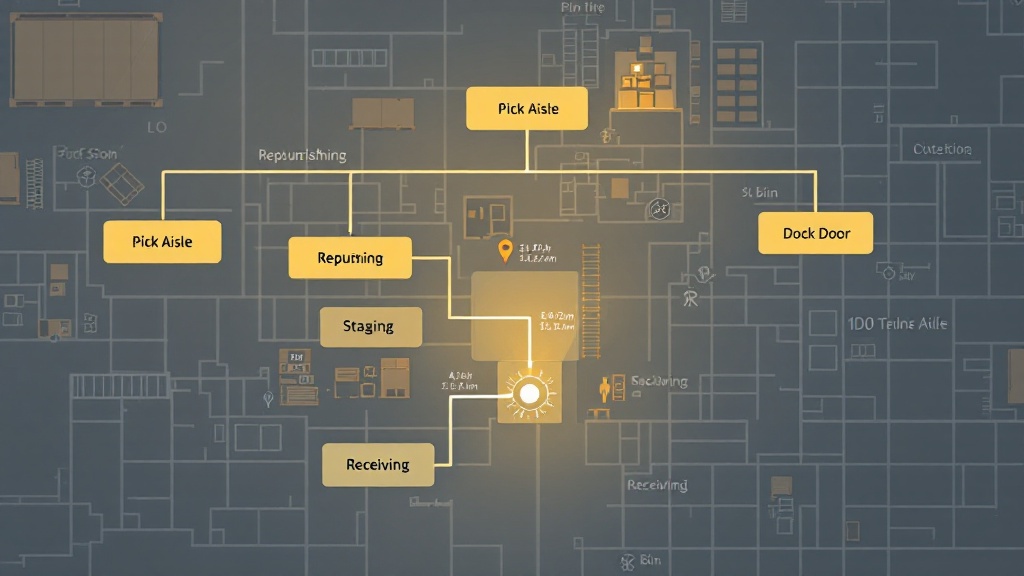
Use this decision tree to pinpoint where mis-picks originate and reduce wasted walking. Start with the question: “Where were the units last seen?” If the ledger shows a recent read in the pick aisle, suspect slotting issues (wrong bin labels, look-alike SKUs, mixed locations) or replenishment timing (stock moved after the pick task was released). If the last read is in staging, validate consolidation and carton labeling—staging errors often masquerade as pick errors.
If the last read is near the dock door but the shipment lacks confirmation, focus on handoffs: trailer build, door assignment changes, or missed portal coverage. If there’s no recent read at all, pivot to receiving: was the ASN closed early, tags applied incorrectly, or were items put away to an exception location?
Only then run a targeted recount: define a tight search zone (e.g., Aisle 7, Bin C3 and adjacent overflow), recount by exception priority, and log findings as part of root-cause-analysis so the fix becomes policy—not folklore.
Operationalizing the Playbook with RFID LedgerOps (From Alert to Closure)

RFID LedgerOps fits this playbook into daily warehouse-ops by continuously reconciling RFID read events against WMS/ERP inventory. When a discrepancy appears—say, 12 units picked but never read at the dock door—the system creates an exception with ranked likely causes, linked read history, and a recommended next step (targeted recount, staging audit, or dock-door validation). An AI Q&A layer supports natural-language triage for order-fulfillment teams: “Where were these last seen?” “What other SKUs were read in that bin?” “Did this tote pass a portal?”—all answered with logged evidence.
Closure matters as much as detection. Each exception should end with a resolution code (slotting fix, replenishment timing change, label correction, portal coverage tweak) and a sync back to the WMS/ERP for inventory adjustment. Over time, your metrics shift from reactive searches to measurable improvement: fewer mis-picks, faster cycle times to resolve “missing” units, and a feedback loop that strengthens slotting discipline and standard work.
That’s the moonshot: not just visibility, but a self-improving system of record and reality.